How Is AI in cybersecurity examples Transforming Cybersecurity in the Real World?
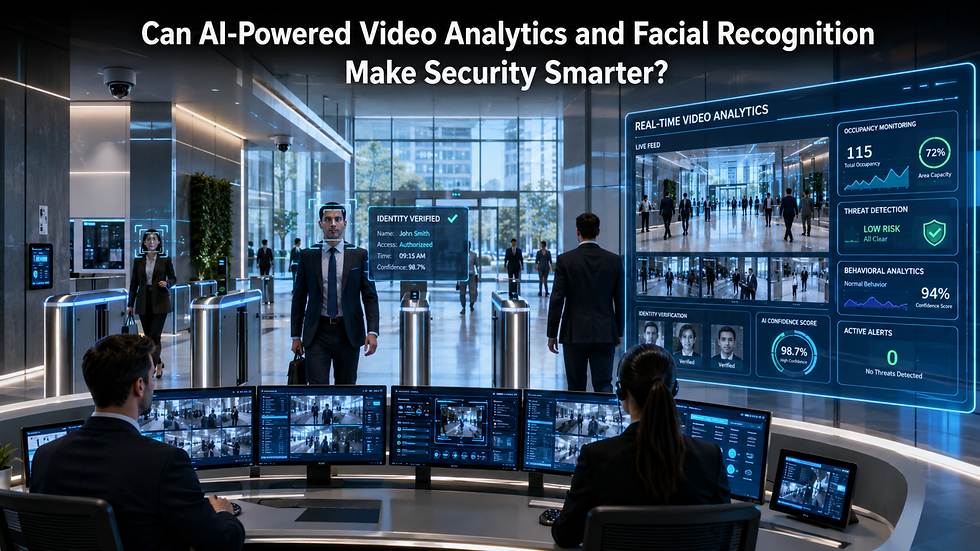
Cyber threats are evolving faster than ever, and traditional security tools often struggle to keep up. So, how are businesses and security teams using artificial intelligence to stay ahead? The answer lies in AI in cybersecurity examples that show how machine learning, automation, and intelligent analytics can detect threats, reduce response times, and strengthen defenses across digital and physical environments.
From identifying suspicious network activity to automating incident response, AI is no longer a futuristic concept in cybersecurity; it is an active part of modern defense strategies.
What Does AI Do in Cybersecurity?
Artificial intelligence helps cybersecurity systems analyze large volumes of data, recognize patterns, and identify unusual behavior in real time. Instead of relying solely on predefined rules, AI can learn from historical data and adapt to new threats. AI in cybersecurity examples are many.
In practical terms, AI supports cybersecurity by helping organizations:
Detect anomalies faster
Identify phishing attempts
Prevent fraud
Monitor user behavior
Automate incident response
Strengthen video-based security systems
This makes AI valuable not only for digital infrastructure but also for smart physical security ecosystems.
Why AI Matters in Modern Security

Cyberattacks have become more complex, frequent, and difficult to detect manually. AI improves security operations by reducing the time it takes to spot threats and respond effectively.
Key advantages include:
Faster threat detection
Reduced false positives
Continuous monitoring
Better scalability across systems
More efficient security operations
These capabilities make AI especially useful for organizations managing large networks, cloud systems, IoT devices, and surveillance infrastructure.
AI in Cybersecurity Examples That Show Real Impact
1. Threat Detection and Anomaly Monitoring
One of the most common uses of AI is identifying suspicious activity that may indicate a cyberattack. AI systems analyze user behavior, network traffic, and device activity to detect anomalies that traditional systems might miss.
For example, if an employee account suddenly attempts multiple unusual logins from a foreign location, AI can flag that activity instantly.
2. Phishing and Email Security
Phishing remains one of the biggest cybersecurity threats. AI-powered email security tools can analyze message patterns, suspicious links, spoofed addresses, and malicious attachments more effectively than static filters.
This helps businesses stop phishing attempts before employees interact with harmful content.
3. Fraud Prevention in Financial Systems
Banks, fintech platforms, and e-commerce businesses use AI to monitor transactions and identify suspicious payment behavior. If spending patterns suddenly shift or multiple transactions occur from unexpected locations, AI can trigger alerts or block activity automatically.
4. Security Operations Automation
Security teams often face alert fatigue from overwhelming volumes of data. AI helps by prioritizing incidents, correlating events across systems, and automating repetitive tasks such as log analysis and alert triage.
This allows security professionals to focus on high-priority threats rather than manual investigation alone.
5. Identity and Access Monitoring
AI can evaluate login behavior, device fingerprints, and access requests to detect compromised credentials or unauthorized access attempts. This strengthens zero-trust security strategies and improves overall account protection.
6. Video-Based Security and Intelligent Surveillance
AI also plays a growing role in physical cybersecurity and surveillance. A smart security camera can detect motion patterns, identify restricted-area access, and monitor suspicious behavior using built-in AI analytics. This bridges the gap between physical and digital security, especially in offices, retail environments, warehouses, and campuses.
How Businesses Use AI Across Different Security Environments

AI cybersecurity solutions are now used across multiple industries and security layers.
Enterprise IT Security
Large organizations use AI to monitor endpoints, detect malware, and secure remote work environments.
Cloud Security
AI helps identify risky behavior in cloud platforms, protect data, and detect unusual access events.
Retail and Commercial Security
Businesses combine AI with surveillance systems to improve theft detection, access control, and incident awareness.
Healthcare and Critical Infrastructure
Hospitals, utilities, and industrial facilities use AI to protect sensitive data and monitor operational security risks.
Challenges and Limitations of AI in Cybersecurity
Although AI is powerful, it is not a complete replacement for human expertise. Organizations should be aware of several challenges:
AI models require high-quality data.
False positives can still occur.
Sophisticated attackers may attempt to evade AI systems.
Ethical and privacy concerns must be addressed.
Security teams still need human oversight and strategic judgment.
AI works best when combined with strong security policies, trained personnel, and layered defenses.
What to Look for in an AI Cybersecurity Solution

When evaluating AI-powered security tools, consider the following:
Real-time detection capabilities
Ease of integration with existing systems
Behavioral analytics and anomaly detection
Automation and incident response features
Scalability across multiple environments
Strong reporting and dashboard visibility
If video monitoring is part of the security strategy, an AI Security Camera with analytics capabilities can add another layer of proactive protection.
The Future of AI in Cybersecurity
AI will continue to become more important as threats grow more sophisticated. Future developments are likely to include:
More predictive threat intelligence
Better automated response systems
Stronger identity verification tools
Deeper integration with cloud and endpoint security
Smarter physical surveillance and access monitoring
Organizations that invest in AI now will be better positioned to respond to the next generation of cyber threats.
You can also watch: VideoraIQ | Turn Your CCTV Into Real-Time AI Threat Detection
Summary
AI in cybersecurity examples is transforming cybersecurity by improving threat detection, automating response, reducing fraud, and strengthening both digital and physical security systems. From phishing defense to intelligent surveillance, practical AI applications are already helping businesses respond faster and protect more effectively.
Frequently Asked Questions
What are some practical AI in cybersecurity examples?
Common examples include phishing detection, fraud prevention, anomaly monitoring, automated incident response, and AI-powered surveillance systems.
How does AI improve cybersecurity?
AI analyzes large volumes of data to identify unusual behavior, prioritize threats, and automate repetitive security tasks.
Is AI only useful for digital cybersecurity?
No. AI also supports physical security through intelligent surveillance, access control, and behavior monitoring.
Can small businesses benefit from AI cybersecurity tools?
Yes. Many AI-powered solutions are now scalable and affordable for smaller businesses, especially cloud-based monitoring and email protection tools.
Are AI cybersecurity systems fully automatic?
Not entirely. AI improves speed and accuracy, but human oversight is still essential for strategic decisions, investigations, and policy enforcement.


Comments