How Can Enterprise IT Security Protect Modern Organizations from Evolving Threats?
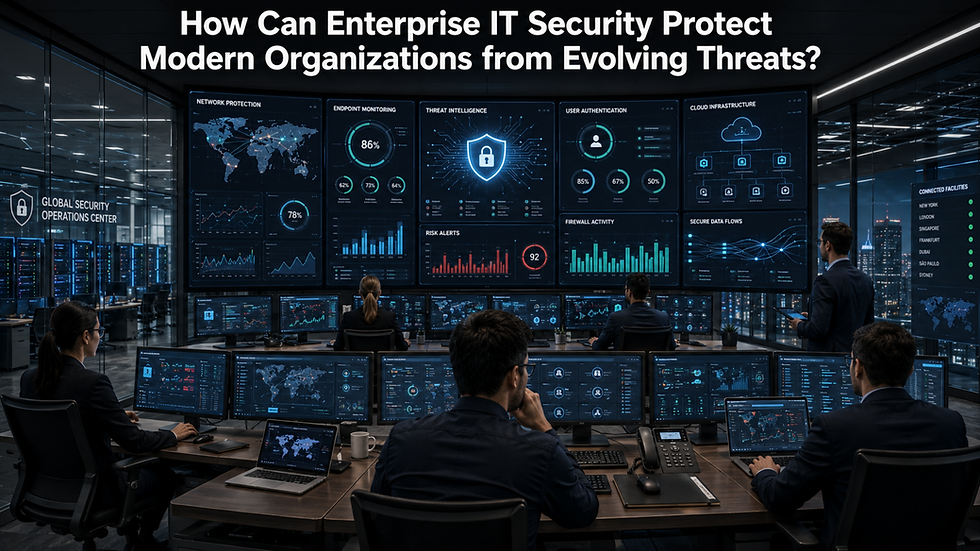
As cyber threats become more sophisticated, how can businesses safeguard their networks, sensitive data, and daily operations? enterprise IT security provides a comprehensive framework of technologies, policies, and best practices that help organizations reduce risk, strengthen resilience, and maintain secure digital environments.
Today, businesses rely heavily on connected devices, cloud services, remote employees, and integrated technology platforms. Without a well-planned security strategy, even a single vulnerability can lead to operational disruption, financial losses, or reputational damage. Modern enterprise security focuses on preventing attacks while enabling businesses to operate efficiently and confidently.
What Is Enterprise IT Security?
Enterprise IT security refers to the collection of technologies, policies, and operational practices designed to protect an organization's digital infrastructure.
A complete security strategy typically protects:
Business networks
Servers and endpoints
Cloud environments
Applications
Employee devices
Sensitive business information
Customer data
Connected operational systems
Rather than relying on a single security product, organizations build multiple layers of protection that work together to reduce overall risk.
Why Is Enterprise Security More Important Than Ever?
Organizations face increasingly complex threats every day.
These include:
Ransomware attacks
Phishing campaigns
Insider threats
Credential theft
Data breaches
Supply chain vulnerabilities
Unauthorized network access
As digital transformation accelerates, businesses require security strategies capable of protecting both physical and digital assets.
How Physical Security Supports Enterprise IT

Digital security is strongest when combined with physical security measures.
Modern organizations often integrate cybersecurity with surveillance, visitor management, and building access control.
Proper commercial security camera maintenance ensures surveillance systems continue operating reliably by keeping cameras clean, properly aligned, regularly updated, and functioning during critical security events.
Routine maintenance also improves image quality and reduces the risk of hardware failures that could create security gaps.
Core Components of an Enterprise Security Strategy
A strong security framework combines technology, governance, and continuous monitoring.
Identity and Access Management
Controlling who can access business systems is one of the most important security measures.
Organizations should:
Use multi-factor authentication
Apply role-based permissions
Regularly review user access
Remove inactive accounts promptly
Network Protection
Firewalls, intrusion prevention systems, and network segmentation reduce opportunities for attackers to move across business infrastructure.
Continuous traffic monitoring also helps identify suspicious activity before it becomes a larger incident.
Endpoint Security
Every laptop, desktop, mobile device, and server represents a potential entry point.
Endpoint protection solutions help detect malware, isolate infected devices, and prevent unauthorized software execution.
Data Protection
Protecting sensitive information involves:
Encryption
Secure backups
Data loss prevention
Access controls
Regular security audits
These measures reduce exposure even if systems are compromised.
Best Practices for Strengthening Enterprise Security

Organizations can significantly improve protection by adopting proactive security practices.
Conduct Regular Risk Assessments
Security risks evolve continuously. Periodic assessments identify vulnerabilities before attackers exploit them.
Train Employees
Employees remain one of the strongest defenses against cyber threats.
Training should include:
Recognizing phishing emails
Creating strong passwords
Reporting suspicious activity
Safe remote working practices
Apply Security Updates
Keeping operating systems, applications, and network devices updated reduces known vulnerabilities.
Monitor Continuously
Real-time monitoring helps identify unusual behavior quickly, allowing faster incident response.
Prepare Incident Response Plans
Organizations should define clear procedures for handling security incidents before they occur.
The Role of Surveillance in Enterprise Security
Physical surveillance complements cybersecurity by providing visibility into facilities, assets, and personnel.
Many organizations deploy commercial surveillance systems to monitor offices, warehouses, campuses, retail locations, manufacturing facilities, and distribution centers. Integrated with access control and security operations, surveillance systems improve situational awareness while supporting investigations and operational oversight.
When physical monitoring works alongside cybersecurity tools, organizations gain stronger protection across both digital and physical environments.
Common Challenges Organizations Face

Enterprise security planning involves balancing protection with operational efficiency.
Common challenges include:
Increasing Threat Complexity
Cybercriminals continually develop more advanced attack techniques.
Hybrid Work Environments
Remote employees expand the number of devices and locations requiring protection.
Regulatory Compliance
Businesses must comply with industry standards and privacy regulations.
Budget Priorities
Security investments must balance operational needs with long-term risk reduction.
Technology Integration
Legacy infrastructure may require additional planning when integrating newer security platforms.
How to Build a Long-Term Security Strategy
Successful organizations view security as an ongoing process rather than a one-time project.
An effective long-term strategy includes:
Establishing security policies.
Performing regular vulnerability assessments.
Monitoring systems continuously.
Training employees consistently.
Updating technologies proactively.
Reviewing security performance through ongoing audits.
Continuous improvement helps organizations adapt to changing threats while maintaining business continuity.
You can also watch: VideoraIQ: Transforming Surveillance with AI-Powered Video Intelligence
Summary
Enterprise IT security combines cybersecurity technologies, access controls, employee awareness, continuous monitoring, and physical security measures to protect modern organizations. By implementing layered defenses and regularly improving security practices, businesses can reduce cyber risks, safeguard sensitive information, and strengthen operational resilience in an increasingly connected world.
FAQ
What is enterprise IT security?
Enterprise IT security is the practice of protecting an organization's networks, systems, applications, devices, and sensitive data through layered security technologies and policies.
Why is enterprise security important?
It helps prevent cyberattacks, protects valuable business information, reduces operational disruption, and supports regulatory compliance.
How often should organizations review their security strategy?
Security assessments should be performed regularly, especially after technology changes, major updates, or emerging threat developments.
Does enterprise security include physical security?
Yes. Many organizations integrate cybersecurity with access control, surveillance, and facility security to create comprehensive protection.
What is the biggest challenge in enterprise IT security?
Keeping pace with evolving cyber threats while maintaining secure, efficient, and scalable business operations is one of the greatest ongoing challenges.


Comments