Can AI Video Surveillance Software Make Security Smarter and More Efficient?
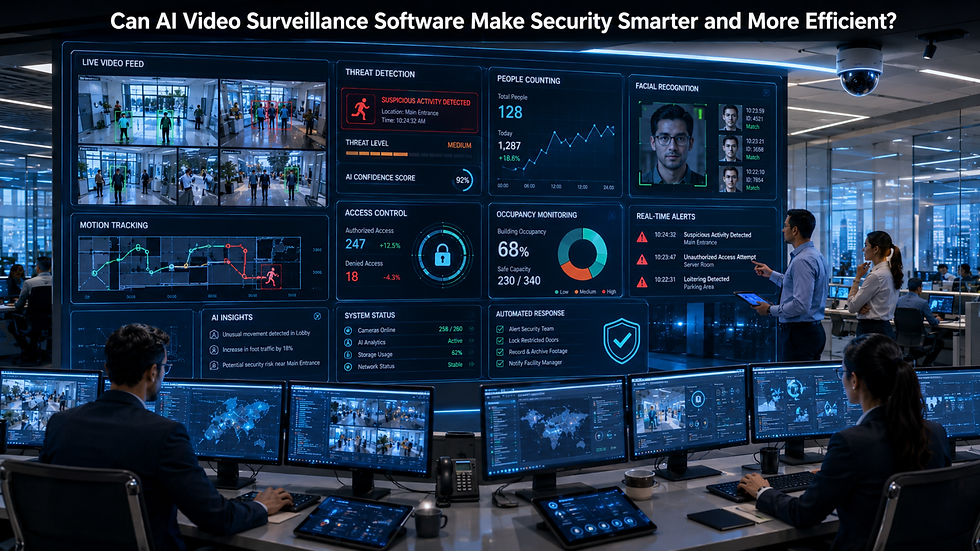
What if your surveillance system could do more than record footage? What if it could detect unusual behavior, send instant alerts, count people, track movement, and help teams make faster decisions? That is exactly why businesses are investing in ai video surveillance software to turn passive video into active intelligence that improves security, operations, and visibility.
At its core, AI-powered surveillance software uses machine learning and computer vision to analyze video streams in real time. Instead of relying only on human monitoring, it helps identify events, patterns, and risks automatically. That means better awareness, faster response, and more value from existing camera infrastructure.
What Is AI Video Surveillance Software?
AI video surveillance software is a platform that uses artificial intelligence to analyze video footage from surveillance cameras. It can recognize patterns, detect anomalies, classify objects, and trigger alerts based on predefined conditions or learned behavior.
Unlike traditional systems that mainly store recordings, AI-enabled platforms help organizations understand what is happening as it happens. Depending on the solution, this may include:
Intrusion detection
Motion analysis
Facial recognition
Queue monitoring
Occupancy counting
Vehicle recognition
Loitering detection
Behavioral analytics
This makes video surveillance more proactive and useful across many industries.
Why Businesses Are Adopting AI Surveillance Tools

Organizations are no longer looking at surveillance as a simple recording system. They want tools that help improve safety, reduce losses, and support faster decision-making.
Here are some of the biggest reasons businesses adopt AI-powered surveillance:
Real-time awareness: Teams receive alerts the moment suspicious activity occurs.
Reduced manual monitoring: AI filters hours of footage into meaningful events.
Faster investigations: Searchable analytics make it easier to review incidents.
Operational visibility: Video data can support staffing, customer flow, and facility management.
Scalable monitoring: Businesses can manage multiple locations more efficiently.
The result is a surveillance system that contributes to both security and business performance.
How Does AI Surveillance Software Work?
Most AI surveillance platforms follow a similar process:
1. Video Capture
Cameras continuously capture live footage from locations such as offices, stores, warehouses, hospitals, and public areas.
2. AI Analysis
The software processes the footage using algorithms trained to identify people, objects, movement patterns, and unusual behavior.
3. Event Detection
When the system recognizes a specific event—such as unauthorized access, crowding, or suspicious movement it flags the incident.
4. Alerts and Insights
The software can send real-time alerts, log events, and generate dashboards or reports for security and operations teams.
In many setups, an ai camera acts as the front-end device while the surveillance software handles deeper analytics and reporting in the background.
Key Features to Look For in AI Video Surveillance Software

Not all solutions offer the same capabilities. The best platform depends on your environment, security goals, and operational needs.
Real-Time Alerts
Instant notifications are one of the biggest advantages of AI surveillance. Alerts can be triggered by movement in restricted areas, after-hours activity, abandoned objects, or unusual patterns.
Object and Person Detection
Advanced software can distinguish between people, vehicles, animals, and other objects. This helps reduce false alarms and improve event accuracy.
Facial Recognition and Access Monitoring
Some platforms include facial recognition to verify identities, detect watchlist matches, or improve access control workflows.
Occupancy and Crowd Analysis
For retail stores, offices, airports, and public venues, AI can track footfall, crowd density, and queue formation.
Searchable Event History
Instead of manually reviewing hours of video, users can search footage by event type, object, time, or alert category.
Dashboard Reporting
Clear analytics dashboards help teams understand trends, review incidents, and measure system performance over time.
Benefits Beyond Security
One of the biggest shifts in surveillance technology is that it now supports more than protection alone. AI video systems can also improve business operations.
Examples include:
Understanding customer flow in retail
Measuring workplace occupancy
Monitoring service bottlenecks
Improving staffing decisions
Supporting compliance and audit trails
Identifying recurring safety issues
This broader business value is one reason AI-powered surveillance continues to gain traction.
Where AI Surveillance Software Is Used
AI surveillance is no longer limited to high-security facilities. It is now used across a wide range of business environments.
Retail
Retailers use AI surveillance for theft prevention, queue monitoring, shopper behavior analysis, and store traffic insights.
Corporate Offices
Businesses monitor entrances, restricted areas, visitor activity, and employee access patterns more intelligently.
Warehouses and Logistics Centers
AI helps track movement, identify unsafe behavior, and protect inventory across large facilities.
Healthcare Facilities
Hospitals and clinics use surveillance analytics for access control, patient area monitoring, and safety management.
Public Infrastructure
Transit hubs, campuses, and smart city projects use surveillance analytics to improve crowd safety and operational awareness.
As these deployments grow, AI Vision capabilities are becoming central to how organizations understand video data at scale.
Challenges to Consider Before Choosing a Solution

AI surveillance software can be powerful, but implementation should be thoughtful. Businesses should evaluate:
Privacy and Compliance
Video analytics and facial recognition may raise privacy concerns, so it is important to follow local regulations and internal policies.
Data Quality
Poor camera placement, low resolution, or inconsistent lighting can reduce accuracy.
Integration Requirements
The platform should work well with your current cameras, storage systems, access control tools, and security workflows.
Training and Oversight
AI is helpful, but human oversight is still essential for reviewing alerts, refining settings, and making final decisions.
How to Choose the Right Platform
When comparing AI surveillance software, focus on practical business needs rather than feature overload. Ask:
What security or operational problems are we trying to solve?
Does the platform support our current camera setup?
How accurate are the analytics in real-world conditions?
Can the software scale across multiple locations?
Does it provide clear dashboards and actionable alerts?
What privacy, storage, and compliance controls are included?
The right platform should fit your environment, not just offer impressive technology.
You can also watch: AI Unattended Baggage Detection: Enhancing Public Safety | VideoraIQ
Short Summary
AI video surveillance software turns video footage into actionable intelligence. It helps businesses detect threats faster, reduce manual monitoring, improve investigations, and gain operational insights across retail, corporate, healthcare, and logistics environments. With the right setup, it becomes a powerful tool for both security and efficiency.
FAQ
What does AI video surveillance software do?
It analyzes live or recorded video using artificial intelligence to detect events, identify objects, monitor behavior, and send alerts.
Is AI surveillance only for security teams?
No. It can also support operations, retail analytics, staffing decisions, and facility management.
Can AI surveillance work with existing cameras?
In many cases, yes. Many platforms are designed to integrate with existing camera infrastructure.
What industries use AI surveillance software?
Retail, healthcare, logistics, corporate offices, education, transportation, and public infrastructure all use AI surveillance tools.
Is AI surveillance software worth it for small businesses?
It can be, especially for businesses that want better visibility, faster incident response, and more value from their existing camera systems.


Comments